A big thanks to all of you for helping to make Oldmilwaukee.net a popular place to get your dose of Milwaukee History! Have a Happy New Year’s Eve! See you in 2014.

This is a view of an ice castle from a winter festival sometime in the 1940s.
A big thanks to all of you for helping to make Oldmilwaukee.net a popular place to get your dose of Milwaukee History! Have a Happy New Year’s Eve! See you in 2014.
This is a view of an ice castle from a winter festival sometime in the 1940s.
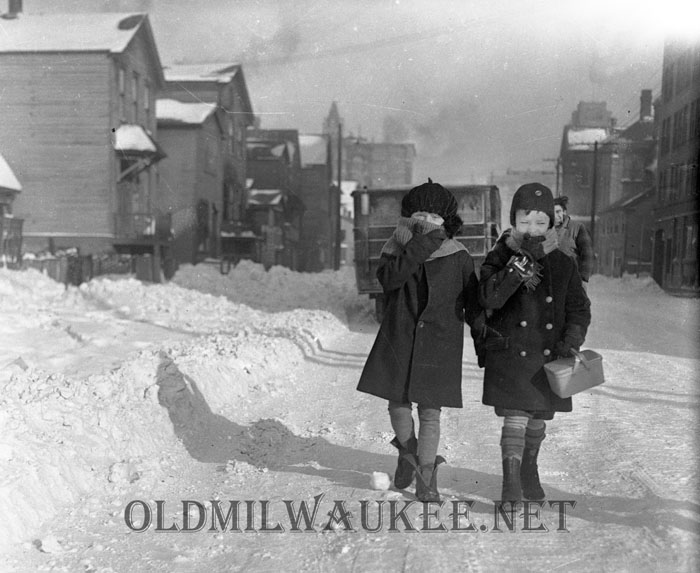
After this weekend’s continuing blizzard I reached into the Oldmilwaukee archives to find this picture from the late 1920s of kids walking to school after a snowstorm.
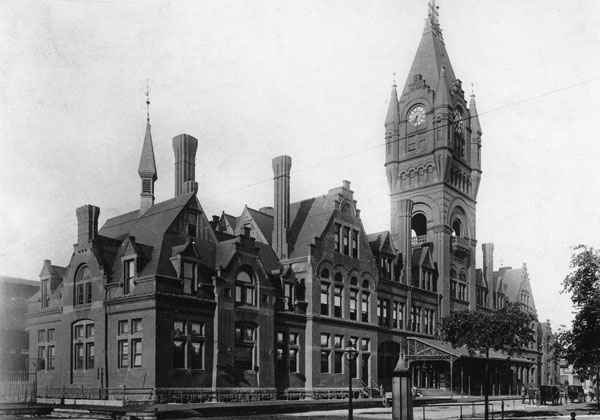
In 1886 the Union Depot train station opened on December 19th to passengers on Everett Street between Third and Fourth streets. It was Milwaukee’s first grand railroad station and lasted until the new train station was built at 5th & St. Paul Avenue in 1965. It was torn down the following year in 1966.
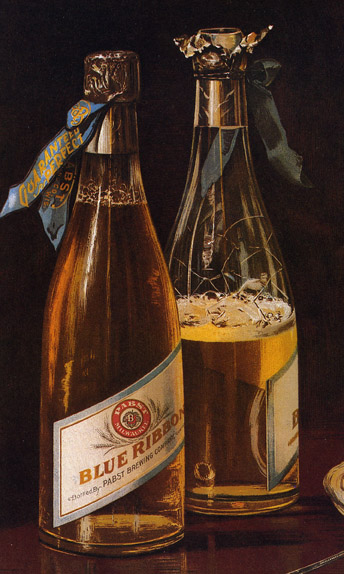
Breweries were always well known for the purity of their product and all the Milwaukee breweries originally used artesian wells to tap into a very clean source of water to brew beer. Of course those wells don’t last forever especially when the well is used heavily. The Pabst brewery well lasted until 1902 when it was forced to use city water drawn from the lake. This article tells about that problem and a little bit of the history of that spring.
Milwaukee Journal – June 12, 1902
WELL RUNS DRYPABST BREWERY ASKS FOR WATER FROM THE CITY.
Famous Springs Which Had a Reputation in the Days of the Indians Appear to Have Yielded All Their Resources to the Making of Beer and Another Supply is Needed.
The artesian wells which have for many years supplied the water for the famous products of the Pabst Brewery have failed and the company has petitioned the city authorities for water accommodations and will be supplied with a large main, which will be laid from Third and Prairie streets.
The springs at the brewery were famous long before the site was selected for the largest brewery in the world and the water which gushed from the earth there was known among the Indians as the great “Mankaki waters” at a time when the great northwest was a wilderness. The springs were enlarged by Jacob Best, founder of the brewery, and later the artesian wells were sunk as the flow from the springs was not sufficient to supply the greatly increased needs of the brewery. For nearly a score of years this water has been used to make the body of the Pabst beer and its purity and wholesomeness have been a great boon to the company. About one year ago the supply began to fail and it has been a great source of worry to the company, and at present a large quantity of city water is being used. Last month alone more than $5,000 worth of water was purchased from the city mains and as soon as the big 15-inch pipe which the city engineer will ask to be laid is tapped, the company will probably become the largest user of municipal water.
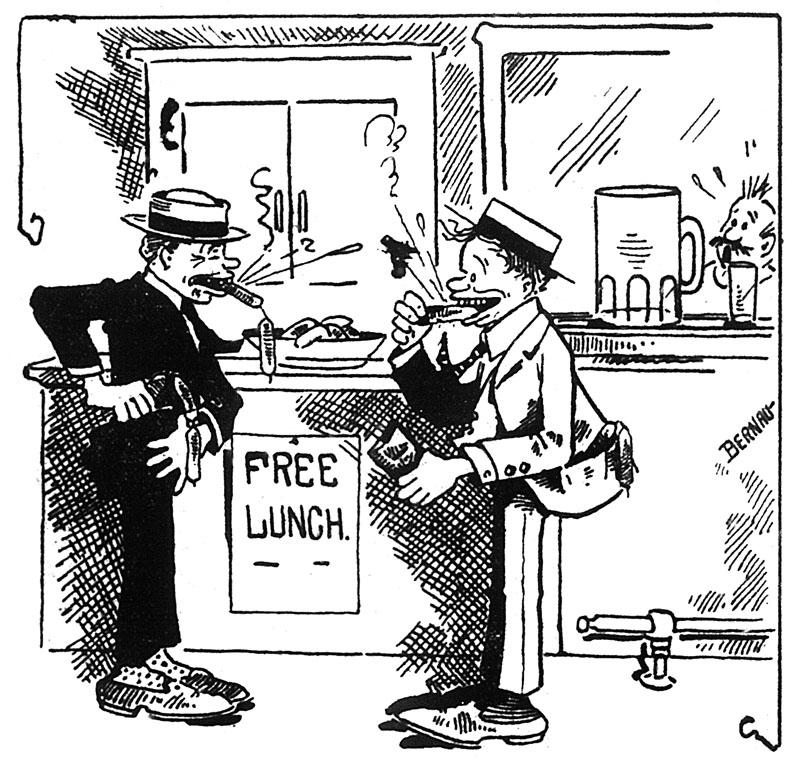
For a very long time in the late 19th century until Prohibition closed taverns in 1920, Milwaukee saloons were well known for providing large spreads of free food for their drinking patrons. The higher class taverns and hotel bars downtown served free hot lunches of sandwiches, ham, beef, and sausages with their 5 cent beers. These were extremely popular among the gentlemen of the time and places such as the Pfister bar, the Plankinton Hotel bar, the Gargoyle, and the Schlitz Palm Garden were busily packed by downtown clerks and business-men during lunch time. A man needed a drink at lunch to ease the pressure of the work-day and a healthy snack of sausage would make that glass of beer so much better. Extra salty ham or pretzels would require an extra beer or two to help wash it down. (Milwaukee Journal, March 13, 1952)
Today, although it is becoming harder to find, a rare few local bars have free happy hour spreads which bring back memories of the old days. Otherwise, you have to travel to Spain to get the traditional free tapas with your beer. A good spanish tavern will provide you with a small sandwich tapa or “cover” to keep the flies out of your beer!
Back in July of 1912, at Fred Smith’s saloon at 30th & Clarke, Alexander Polatsch stepped in with his last nickel for lunch-time beer and a snack. When he grabbed at the free plate of liverwurst with his dirty hands, proprietor Smith made a strong complaint and the two ended up in a fight. A passing patrol officer stepped in and arrested Alexander. At court the next day Judge Neelen fined the young man $10 and costs for disorderly conduct and pronounced, ” I wouldn’t eat any free lunch if I was starving. If a man is hungry he ought to buy a lunch. These fellows go there, and fill up on beer and eat a few bites of sausage and then delude themselves into the belief that they have had a square meal.” (Milwaukee Journal, July 25, 1912)
By the next day the Milwaukee Journal continued to try and feed the controversy that Judge Neelen brought to light. It interviewed several prominent Milwaukee men such as Pat Donahue of the Chamber of Commerce who stated, “Well, I’ll have to starve, that’s all.” Amos F. Gould, on the other hand said, “I don’t see of what benefit they can be to the saloonkeeper, when a man comes in and buys a 5-cent beer and then eats 35-cents worth of lunch. Those free lunches of limburger cheese and serve-a-lot sausage ought to be put just as far away as possible.” (Milwaukee Journal, July 26, 1912)
In the July 27th edition of the Journal, an article entitled “Alderman Denies Reporting Opposition to Free Lunch”, Alderman W. I. Greene of the 18th ward denied a rumor that he was going to introduce an ordinance into the council to abolish free lunches.
Although it might seem like a ridiculous idea, according to the American Brewer’s Review of September 1, 1909, Cleveland was working on passing an ordinance to abolish the free lunch. The article stated “It is intended to introduce an ordinance in the common council making illegal the supply of free food in any retail drink establishment. In case the Common Council refuses to pass such an ordinance on the ground that it would be unconstitutional, an appeal will be made to the city health office for the abolition of free lunch on the ground that it is unsanitary and a breeder of disease.” The law was eventually enacted for the entire state of Ohio limiting saloon lunches to pretzels, crackers, and cheese. The city of Los Angeles was also at the time working on a similar ordinance to abolish free lunches but in December of 1912 it was, “…defeated by a heavy vote.” (New York Times, December 4, 1912). Chicago enacted their anti free-lunch ordinance in 1917. San Francisco too enacted an ordinance abolishing the free lunch in February 1918. That ordinance stated:
Section 1. It shall be unlawful for any person, firm or corporation engaged in the business of selling spiritous, malt or fermented liquors or wines or any admixture thereof in less quantities than one quart or to whom has been issued a Retail Liquor Dealer’s License by the Tax Collector of the City and County of San Francisco, to set up, maintain, conduct or carry any lunch counter, table, sideboard, buffet or other device whereon are kept, served, furnished, distributed or consumed any meals, parts of meals or articles of food for the free use of or gratuitous distribution to patrons of any such business.” (San Francisco Municipal Record, February 28, 1918)
Eventually, the larger battle against alcohol resulted in the Volstead Act, beginning on January 17, 1920 and saloons had the bigger worry of not being able to sell beer at all.
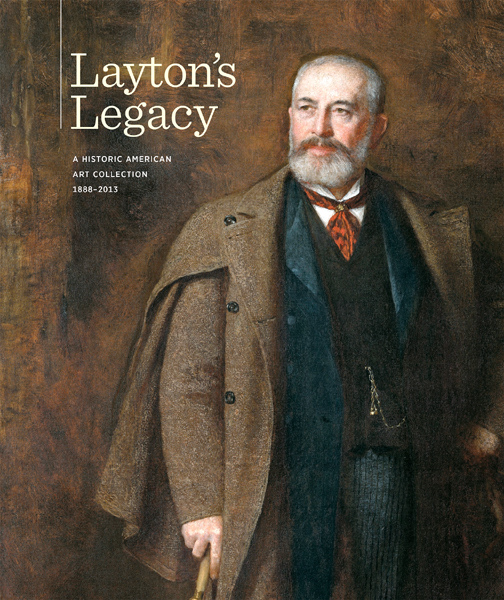
Layton’s Legacy: A Historic American Art Collection, 1888-2013
Meet Authors Eric Vogel and John Eastberg
Authors Eric Vogel and John Eastberg will discuss their recently published book on Layton, as well as sharing information on the research process and the materials they used from the UWM Libraries.
Sunday, December 8, 2013
3-4pm
Special Collections, 4th Floor
UWM Golda Meir Library
2311 E. Hartford Ave.
Milwaukee, WI 53211
Free and open to the public. Visit the UWM website or Layton’s Legacy website for more details.